
Redefine Success
Why It Is Important to Make a Will
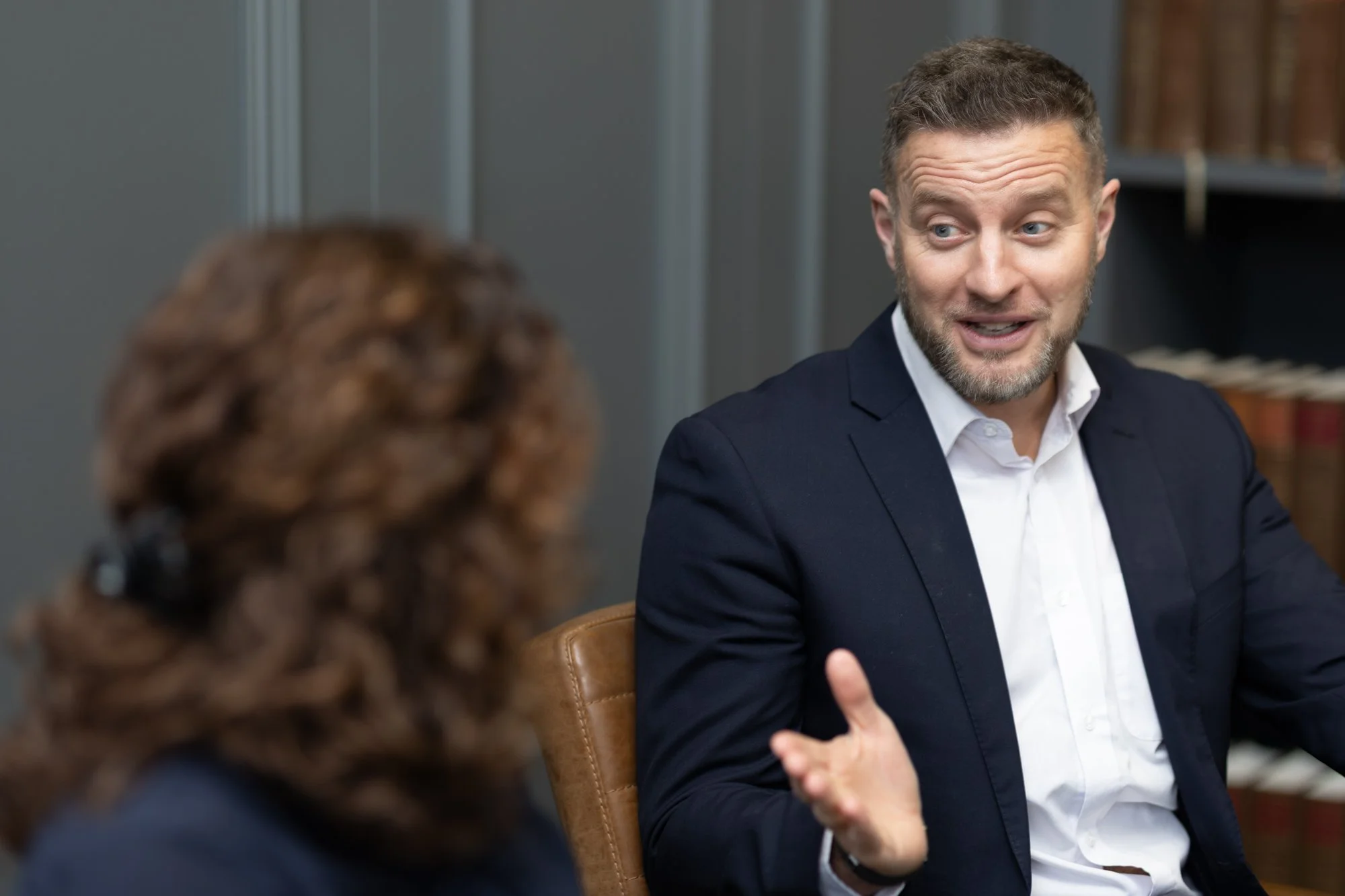
By Joe Mallon, Director, Mallon & Co Solicitors
In my years of practice, one of the most common and concerning situations I encounter is when someone passes away without having made a will. The consequences can be devastating for the people left behind, and they are almost always avoidable.
Making a will is one of the single most important things you can do to protect the people you love. It is not just for the elderly or the wealthy. If you have a partner, children, property, savings, or simply people you care about, you need a will. Without one, you have no say whatsoever in what happens to your assets after you die.
What Happens If You Die Without a Will in Northern Ireland?
If you die without a valid will in Northern Ireland, you are said to have died “intestate.” Your estate, meaning everything you own, is then distributed according to a rigid set of rules known as the intestacy rules, set out in the Administration of Estates Act (Northern Ireland) 1955 and the Administration of Estates (Northern Ireland) Order 1979.
These rules follow a strict legal formula based on family relationships. They do not take into account your wishes, your personal circumstances, or the promises you may have made to the people closest to you. The results can be deeply unfair and often come as a shock to bereaved families.
The Harsh Reality for Unmarried Couples
This is an area of the law that I feel particularly strongly about, because I see the consequences first-hand. There is a widespread and deeply damaging misconception in Northern Ireland that long-term partners who live together have the same rights as married couples. They do not. There is no such thing as a “common law marriage” in Northern Ireland.
Let me give you an example of the kind of situation I see all too often.
Imagine a couple. Let’s call them Sean and Marie. They have been together for twenty years. They live together in a house that is in Sean’s sole name. They have built a life together, shared bills, raised children, and supported each other through everything life has thrown at them. They consider themselves as good as married, and assume that if anything happens to one of them, the other will be taken care of.
Then Sean dies suddenly, without a will.
Under the intestacy rules in Northern Ireland, Marie has no automatic right to inherit anything. Not the house. Not Sean’s savings. Not his car. Nothing. Because they were not married or in a civil partnership, the law does not recognise Marie as Sean’s next of kin, regardless of how long they were together or how committed their relationship was.
Instead, Sean’s entire estate passes to his children. If he had no children, it would go to his parents. If no parents, to his siblings. Marie, the person who shared his life for two decades, is left with nothing.
Marie could potentially bring a legal claim under the Inheritance (Provision for Family and Dependants) (Northern Ireland) Order 1979. To do so, she would need to prove that she had been cohabiting with Sean as if they were spouses for a continuous period of at least two years before his death, or that she was being maintained by him. Even if successful, the court may only award her provision for her “maintenance,” which is typically a modest amount, far less than what a spouse would receive. It would involve court proceedings, legal costs, emotional stress, and an uncertain outcome, all at the worst possible time.
All of this could have been avoided if Sean had made a will.
It Is Not Just About Unmarried Couples
While the position of unmarried cohabiting couples is the starkest example, there are many other situations where dying without a will can lead to unexpected and unwanted outcomes:
• If you are married with children, your spouse does not automatically inherit your entire estate. Your spouse receives personal belongings and a statutory legacy, and the remainder is divided between your spouse and children. This can force the sale of the family home.
• If you have stepchildren, they have no automatic right to inherit from you under the intestacy rules. Only children related to you by blood or formal adoption will benefit.
• If you wish to leave something to a friend, a charity, or a more distant relative, they will receive nothing unless you name them in a will.
• If you are separated but not yet divorced, your estranged spouse may still inherit a significant portion of your estate under the intestacy rules.
• If you have no surviving spouse, children, or parents, your estate could pass to distant relatives you may barely know, or in extreme cases, to the Crown.
Making a Will Is Simpler Than You Think
I think one of the reasons people put off making a will is because they assume it is complicated, expensive, or something they can deal with “later.” In my experience, it is none of those things.
A straightforward will can usually be completed in a single appointment. I will sit down with you, discuss your wishes, explain your options, and prepare a will that is legally robust and tailored to your circumstances. I recently completed a specialist course on will preparation at the Institute of Professional Legal Studies at Queen’s University Belfast, and I am passionate about making sure that every client’s will is drafted with precision and care.
The cost of making a will is modest, especially when you consider the alternative. The legal fees, court costs, and emotional toll of a disputed or intestate estate will always far exceed the cost of putting a proper will in place.
When Should You Make or Review Your Will?
I always say that the best time to make a will is now. But there are certain moments in life when it is especially important:
• When you move in with a partner, particularly if you are not married or in a civil partnership. This is the single most important time to make a will, given the position of the law in Northern Ireland.
• When you get married. Getting married in Northern Ireland automatically revokes any existing will, so a new will must be prepared.
• When you have children or grandchildren. A will allows you to appoint guardians for minor children and ensure they are provided for.
• When you buy a property. Your home is likely your most valuable asset, and you should make sure it goes to the right person.
• When you go through a divorce or separation.
• When a beneficiary or executor named in your existing will passes away.
• Every three to five years, even if nothing has changed, to make sure your will still reflects your wishes.
A Word About Powers of Attorney
While we are on the subject of planning for the future, I also strongly encourage every adult to consider putting an Enduring Power of Attorney in place at the same time as making their will. An EPA allows you to appoint someone you trust to manage your financial affairs if you ever lose the capacity to do so yourself. Like a will, it can only be made while you have capacity. If you wait until it is too late, your family will face a much more difficult and expensive process through the Office of Care and Protection.
Do Not Leave It to Chance
The law in Northern Ireland does not protect everyone equally when someone dies without a will. Unmarried partners, stepchildren, and close friends are particularly vulnerable. The only way to ensure that the people you love are looked after is to make a will.
If you have been putting it off, I would encourage you to take that step today. Contact our team in Maghera on 028 796 42670 or Coleraine on 028 7034 3483 to arrange an appointment. We also offer after-hours appointments for clients who cannot visit during working hours.
It will take less time than you think, and it will give you and your family genuine peace of mind.
Joe Mallon
Director, Mallon & Co Solicitors
Station Master’s House, 16 Station Road, Maghera BT46 5BS
Confidence doesn’t always arrive with a bold entrance. Sometimes, it builds quietly, step by step, as we show up for ourselves day after day. It grows when we choose to try, even when we’re unsure of the outcome. Every time you take action despite self-doubt, you reinforce the belief that you’re capable. Confidence isn’t about having all the answers — it’s about trusting that you can figure it out along the way.
The key to making things happen isn’t waiting for the perfect moment; it’s starting with what you have, where you are. Big goals can feel overwhelming when viewed all at once, but momentum builds through small, consistent action. Whether you’re working toward a personal milestone or a professional dream, progress comes from showing up — not perfectly, but persistently. Action creates clarity, and over time, those steps forward add up to something real.
You don’t need to be fearless to reach your goals, you just need to be willing. Willing to try, willing to learn, and willing to believe that you’re capable of more than you know. The road may not always be smooth, but growth rarely is. What matters most is that you keep going, keep learning, and keep believing in the version of yourself you’re becoming.

Small Steps Create Big Shifts
It All Begins Here
Confidence doesn’t always arrive with a bold entrance. Sometimes, it builds quietly, step by step, as we show up for ourselves day after day. It grows when we choose to try, even when we’re unsure of the outcome. Every time you take action despite self-doubt, you reinforce the belief that you’re capable. Confidence isn’t about having all the answers — it’s about trusting that you can figure it out along the way.
The key to making things happen isn’t waiting for the perfect moment; it’s starting with what you have, where you are. Big goals can feel overwhelming when viewed all at once, but momentum builds through small, consistent action. Whether you’re working toward a personal milestone or a professional dream, progress comes from showing up — not perfectly, but persistently. Action creates clarity, and over time, those steps forward add up to something real.
You don’t need to be fearless to reach your goals, you just need to be willing. Willing to try, willing to learn, and willing to believe that you’re capable of more than you know. The road may not always be smooth, but growth rarely is. What matters most is that you keep going, keep learning, and keep believing in the version of yourself you’re becoming.

Turn Intention Into Action
It All Begins Here
Confidence doesn’t always arrive with a bold entrance. Sometimes, it builds quietly, step by step, as we show up for ourselves day after day. It grows when we choose to try, even when we’re unsure of the outcome. Every time you take action despite self-doubt, you reinforce the belief that you’re capable. Confidence isn’t about having all the answers — it’s about trusting that you can figure it out along the way.
The key to making things happen isn’t waiting for the perfect moment; it’s starting with what you have, where you are. Big goals can feel overwhelming when viewed all at once, but momentum builds through small, consistent action. Whether you’re working toward a personal milestone or a professional dream, progress comes from showing up — not perfectly, but persistently. Action creates clarity, and over time, those steps forward add up to something real.
You don’t need to be fearless to reach your goals, you just need to be willing. Willing to try, willing to learn, and willing to believe that you’re capable of more than you know. The road may not always be smooth, but growth rarely is. What matters most is that you keep going, keep learning, and keep believing in the version of yourself you’re becoming.

Make Room for Growth
It All Begins Here
Confidence doesn’t always arrive with a bold entrance. Sometimes, it builds quietly, step by step, as we show up for ourselves day after day. It grows when we choose to try, even when we’re unsure of the outcome. Every time you take action despite self-doubt, you reinforce the belief that you’re capable. Confidence isn’t about having all the answers — it’s about trusting that you can figure it out along the way.
The key to making things happen isn’t waiting for the perfect moment; it’s starting with what you have, where you are. Big goals can feel overwhelming when viewed all at once, but momentum builds through small, consistent action. Whether you’re working toward a personal milestone or a professional dream, progress comes from showing up — not perfectly, but persistently. Action creates clarity, and over time, those steps forward add up to something real.
You don’t need to be fearless to reach your goals, you just need to be willing. Willing to try, willing to learn, and willing to believe that you’re capable of more than you know. The road may not always be smooth, but growth rarely is. What matters most is that you keep going, keep learning, and keep believing in the version of yourself you’re becoming.